Nothing is (not) serious

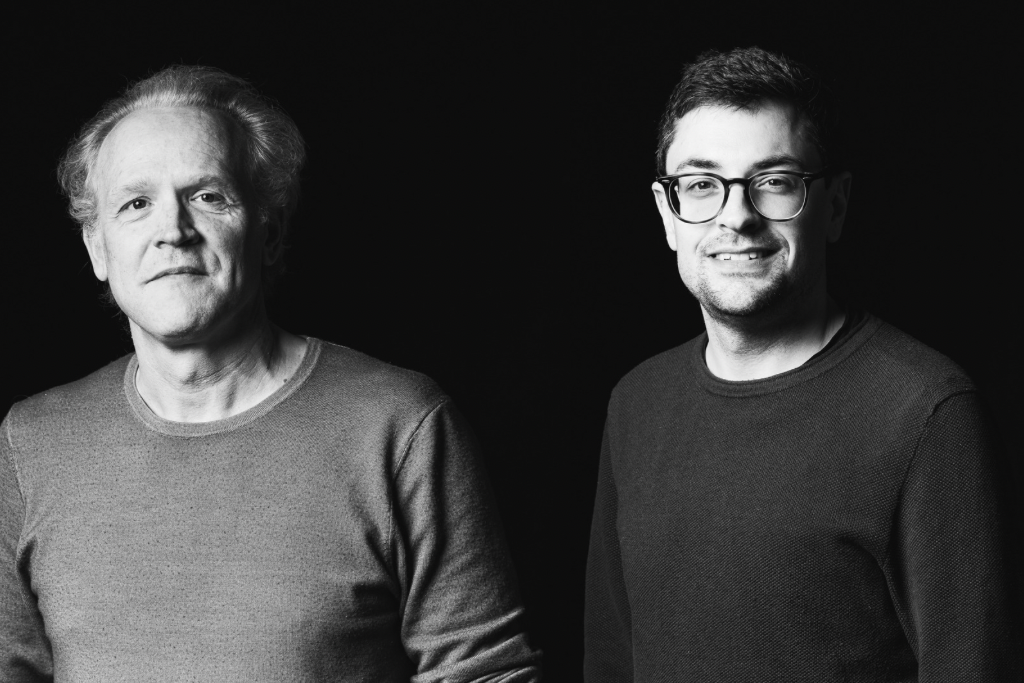
Reality is stranger than fiction. Does that idea hold true for the absurdist comedy, L’Étoile, by self-made musician Emmanuel Chabrier? Director Matthew Eberhardt and musical director Nicolas Krüger certainly think so. Both are captivated by the composer’s richly imaginative music and firmly believe that the world of L’Étoile deserves to be discovered by a far wider audience. A conversation about absurdity that feels logical, and music that moves in every direction.
L’Étoile balances between absurdity and logic. Where, for you, is the core of the work, Matthew? Matthew: ‘Although the piece is absurd, for the characters their behaviour is completely logical, given the situation they are in. I hope the audience can momentarily forget the rules of their own world and immerse themselves in the universe of King Ouf. Only once you step back into reality after the performance do you realise just how strange it all is. Then again, as the saying goes: reality is often stranger than fiction. In a way, L’Étoile is so true and lifelike that this is precisely what makes it absurd. We want to offer the audience a different perspective, a new way of looking at our world.’
How would you describe Chabrier’s music, Nicolas? Nicolas: ‘Chabrier was extraordinary. He had no formal musical training; he was truly self-made. He came from the countryside and moved to the capital, where he befriended the leading artists of his time. In his music you hear both the refined Parisian salons and the rural landscape; his work is both earthy and delicate.’ Matthew: ‘His music is for everyone!’ Nicolas: ‘He was also a visionary, always curious about new forms of expression. That’s why he was so admired by composers such as Claude Debussy, Maurice Ravel and Francis Poulenc; he was far ahead of his time. He refused to be constrained by anything. He invented his music as he went along.’ Matthew: ‘He would often improvise with friends: reading a newspaper article and immediately dramatising it. I imagine he composed L’Étoile in much the same way – on the spot, as the story unfolded in his mind. He never chooses the obvious.’ Nicolas: ‘Exactly, his music is capricious, unpredictable; you never know what’s coming – que sera sera, as Siroco says. It’s incredibly surprising and innovative, full of imagination; Chabrier was always trying something new. And yes, sometimes it’s a little bit mad. Like a child’s world it can change in an instant. Nothing is entirely serious, yet nothing is not serious.’
How do music and direction influence one another? Matthew: ‘I love seeing how music passes through people and what I can do with that in my direction. Music isn’t tangible; it first has to become human, to be interpreted and felt. From there, we can build together the shape of both the music and the staging.’ Nicolas: ‘I come from a theatre family – my father was a director – so for me, dialogue is just as important as music. Dialogue is also music; it continues and prepares the next musical line. I sometimes feel like a director for musicians.’ Matthew: ‘Music to my ears!’
What draws you to satirical comedy? Matthew: ‘It feels very natural to me. Comedy is real life: how you see the world, how you deal with situations. Take Ouf’s birthday – what does he expect, how does he open his presents? It’s all very concrete and recognisable.’ Nicolas: ‘But comedy is… not easy! People often say that conductors should begin with comedy, with opéra bouffe, because if you can do that, you can do anything. It’s fast, rhythmic, unpredictable. There’s no emotional space like in a romantic aria. You have to be sharp, precise in tempo and timing. I find that challenge exhilarating.’
How do you hope audiences will leave the theatre after L’Étoile? Matthew: ‘That they think: how is it possible we didn’t know this? That they’ve enjoyed themselves, and that they look at our world just a little differently.’ Nicolas: ‘And that they remember the name Chabrier, and go home with open eyes and ears, rediscovering the world, like children.’
Interview: Kyra Bertram